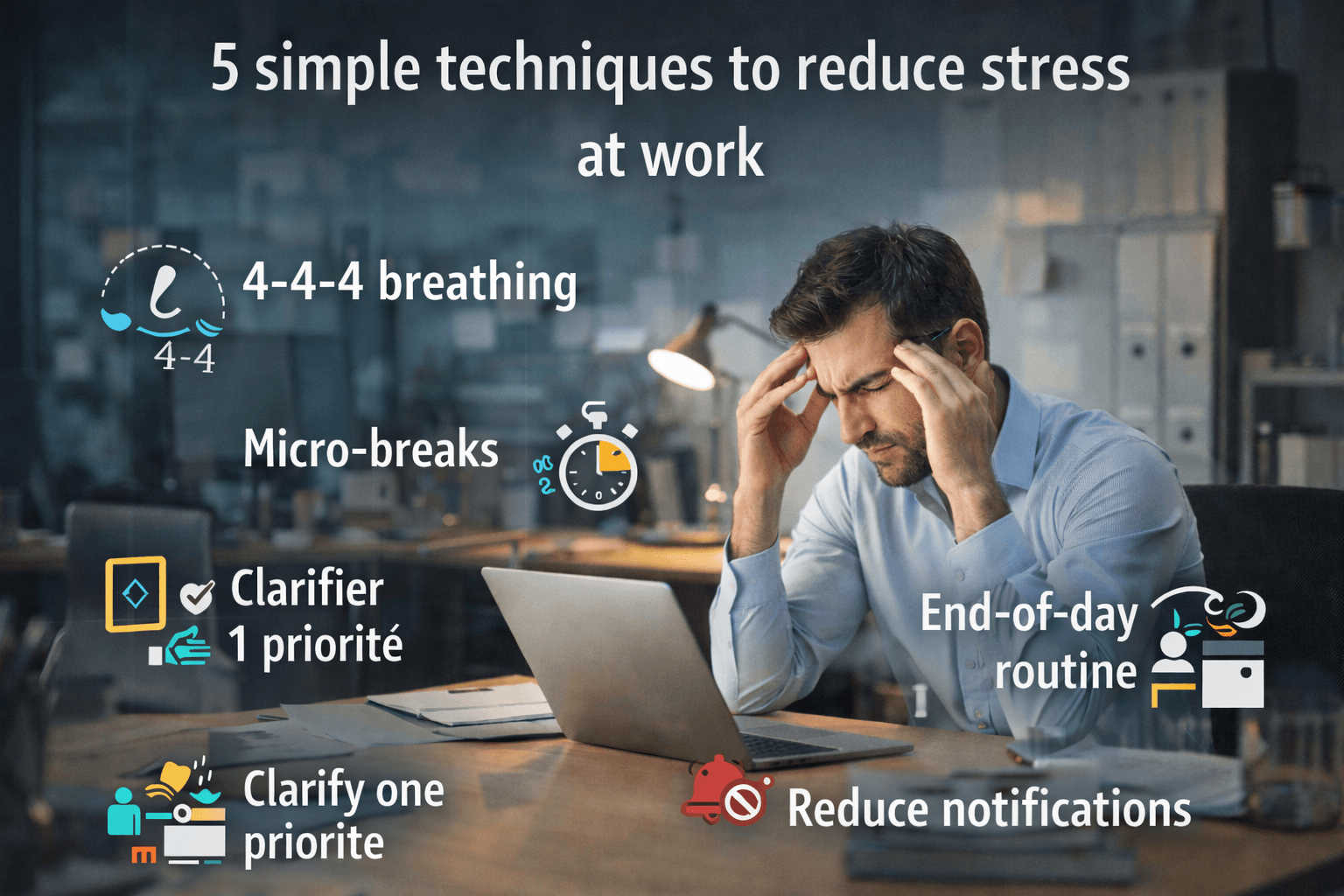
Work stress isn’t only workload. It often comes from uncertainty, mental overload (too many open loops), and constant interruptions. The best approach is pragmatic: calm your body, then regain control of your attention. These 5 techniques work because they’re easy to repeat.
1) 4-4-4 breathing (90 seconds)
Goal: downshift quickly and reduce physiological arousal.
- Inhale through your nose for 4 seconds.
- Hold gently for 4 seconds.
- Exhale slowly for 4 seconds.
- Repeat for 10 cycles (≈ 80–100 seconds).
Tip: if you’re very tense, extend the exhale (4-4-6). Longer exhale often calms faster.
2) Smart micro-breaks (2 minutes every 60–90 minutes)
A real micro-break is not scrolling. It’s recovery.
- Stand up.
- Look far away for 20 seconds (eye reset).
- Stretch neck/shoulders for 30 seconds.
- Drink a little water.
3) Clarify one priority (3 minutes)
When everything is urgent, your brain panics. Give it one anchor.
- Write: “If I do only one thing today, it’s…”
- Define a concrete deliverable (email sent, slide deck finished, decision made).
- Add max 2 small actions that support it.
4) End-of-day shutdown routine (10 minutes)
Much stress comes from unfinished mental loops you carry home.
- Capture: write down everything still in your head.
- Sort: tomorrow vs later.
- Plan: write the first 3 actions for tomorrow.
- Close: a shutdown sentence + 60 seconds to tidy your desk.
5) Reduce notifications (15 minutes of setup, then effortless)
Each notification is a small attention attack. Less noise = less stress.
- Disable non-essential alerts.
- Email: 2–4 check windows per day instead of constant checking.
- Use Focus mode for meetings/deep work.
- Turn off lock-screen previews.
The 8-minute “pressure reset”
- 2 min 4-4-4 breathing
- 2 min micro-break (stand + far gaze)
- 3 min one priority + 2 actions
- 1 min notifications off + start a 25-min focus timer
When you should go further
If you experience panic attacks, severe insomnia, frequent physical symptoms (palpitations, chest tightness, dizziness) or ongoing burnout signs, these techniques help but do not replace medical or psychological support.