Scope
Workplace wellbeing spans sleep, energy, relationships, meaning, focus. Miraye hosts professionals who support these areas through coaching and bounded complementary practices. This guide clarifies what coaching can do and when medical or psychological care is needed.
Prevention and red flags
Persistent irritability, fatigue that will not lift, sleep issues, or strong disengagement deserve attention. Prevention blends organisational fixes (workload, role clarity) and personal routines. Coaching can help negotiate changes but does not replace occupational health or specialists when clinical signs appear.
Mental load
Cognitive load rises with interruptions, multitasking, uncertainty. You can map tasks, delegate, and protect focus blocks. See the stress, burnout, mental load cluster.
Wellbeing coaching role
Coaches help build sustainable habits: movement, digital boundaries, communicating needs. They do not prescribe treatment or give medical diagnoses.
Burnout
Severe exhaustion often needs multidisciplinary care. Coaching may support return-to-work or redesign, coordinated with clinicians. Take physical symptoms or dark thoughts seriously—seek help.
Sleep and screens
Sleep is foundational. Coaches can shape realistic sleep hygiene with your schedule; persistent disorders belong to health professionals.
Food and movement
Without being dietitians, coaches can support simple behaviour goals (walking breaks, meal planning). Therapeutic diets need specialists.
Relationships and conflict
Manager or team tension hits wellbeing hard. Pair coaching with reads on communication and confidence.
What Miraye enables
Compare profiles, book remote sessions, keep a clear history. Check service copy explicitly mentions workplace wellbeing if that is your focus.
FAQ
Does coaching replace medicine? No.
Therapy plus coaching? Often yes, with transparent roles.
Internal links
Limits
This guide is informational, not a personalised health plan.
Micro-recovery
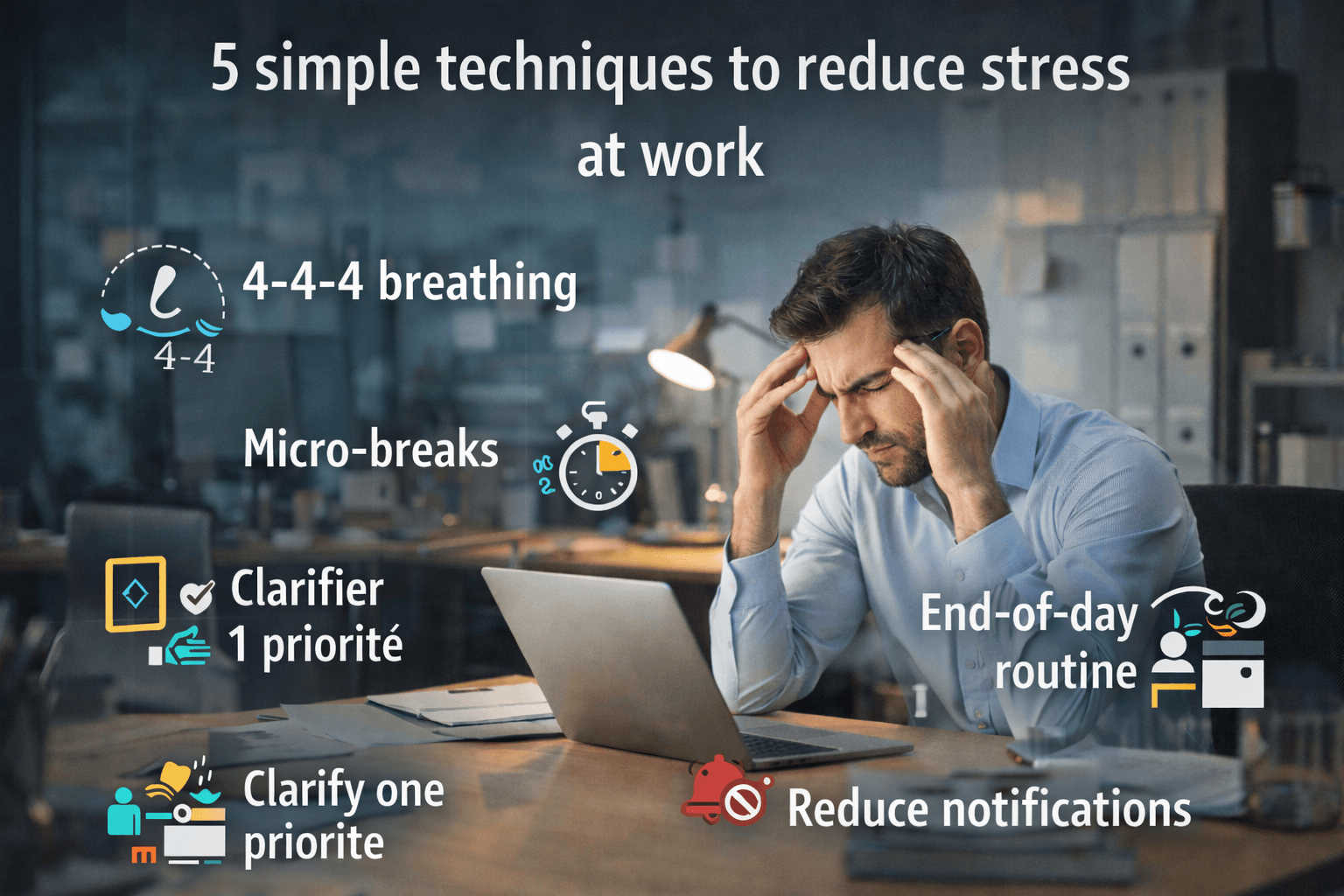
Brief breathing breaks, walking between meetings, muting notifications outside core hours protect the nervous system. Coaching helps embed micro-habits in busy calendars without shame when perfection is impossible.
Hybrid work
Remote blends personal and professional boundaries. Rituals for start/stop, a dedicated zone, and family agreements reduce bleed. Coaches can help negotiate these with employers.
Team culture
Recognition and constructive feedback lower distress. If you lead people, pair wellbeing reads with leadership articles.
Longitudinal care
Wellbeing swings with work seasons. Regular check-ins with a coach prevent last-minute crises when load spikes.
Psychological safety
Feeling safe to speak up reduces chronic stress. Coaches working with teams often surface norms that silence dissent; individuals can also rehearse how to flag issues upward without burning bridges. This is behavioural practice, not HR law advice—escalate formally when policies require.
Energy management
Beyond sleep, map peaks and troughs of attention across the week. Shift analytical work to high-focus windows and administrative chores to low-energy slots when possible. Small calendar tweaks repeated over months compound.
If your organisation runs engagement surveys, use them as conversation starters with your coach, not as a verdict on your worth—separate systemic issues from personal habits when both apply.
Boundaries with managers
Coaching can rehearse how to decline unreasonable after-hours requests or to ask for priorities explicitly. That is skill practice, not a guarantee your manager will change—pair behaviour work with HR processes when policies exist.